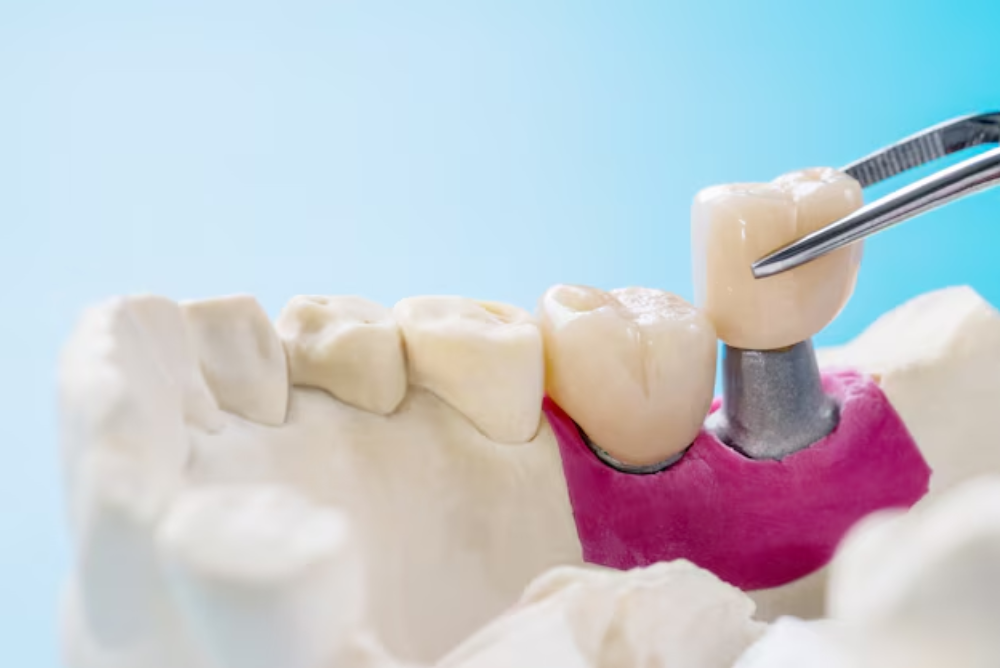
A missing tooth can affect more than just your appearance; it can impact your speech, chewing, and the alignment of your remaining teeth. When a gap is left empty, neighbouring teeth often shift, leading to bite complications.
Dental bridges are a reliable solution to “bridge” these gaps, using the strength of surrounding teeth to support a lifelike replacement. By restoring your smile, you invest in the long-term structural health of your mouth.
For those seeking dental bridges in Yellowknife, modern restorations are more durable and natural-looking than ever. A bridge consists of crowns for the teeth on either side of the gap with a false tooth in between.
These are custom-crafted to match your natural enamel, ensuring a seamless look.
Whether loss was due to injury or decay, a bridge provides a stable solution that helps you return to your normal lifestyle with ease.
Understanding the Different Varieties of Bridges
While traditional fixed bridges are standard, there are several ways to approach tooth replacement depending on the health of your supporting teeth.
In some cases, patients may discuss removable dental bridges, also known as partial dentures. These are held in place by metal clasps and can be taken out for daily cleaning.
- Traditional Fixed Bridges – These involve placing crowns on the teeth on either side of the gap, with a pontic (false tooth) in between.
- Cantilever Bridges – Used when there are adjacent teeth on only one side of the missing tooth space.
- Maryland Bonded Bridges – These use a porcelain or metal framework bonded to the backs of adjacent teeth, requiring less enamel removal.
- Implant-Supported Bridges – These are supported by dental implants rather than natural teeth, providing maximum stability.
What Happens During the Placement Procedure?
If you are visiting a dental clinic in Yellowknife for a bridge, the process typically requires two appointments to ensure a perfect fit and a comfortable bite.
- Preparation – During the first visit, the teeth on either side of the gap are reshaped to allow room for the crowns to be placed over them.
- Impressions – Highly accurate digital or physical moulds of your teeth are made to serve as a blueprint for the dental lab.
- Temporary Bridge – A temporary restoration is usually placed to protect the exposed teeth and gums while your permanent one is made.
- Final Fitting – At the second visit, your new bridge is checked for fit and colour. Once it is perfect, it is cemented into place.
The Long-Term Benefits of Choosing a Bridge
Selecting a bridge comes with a host of functional and emotional benefits. When you consult a dentist near you, they will likely highlight how this treatment preserves your facial structure.
- Restores Speech and Chewing – Missing teeth can cause a lisp; a bridge restores your ability to speak and eat naturally.
- Prevents Teeth Shifting – By filling the void, a bridge keeps your natural teeth in their proper positions.
- Maintains Face Shape – Teeth support your cheeks and lips, helping prevent a sunken look over time.
- Distributes Bite Force – A bridge spreads the pressure of your bite evenly, reducing wear and tear on your natural enamel.
Caring for Your New Restoration
The success of a dental bridge depends heavily on the health of the supporting teeth and gums. Because the bridge is a single unit, it requires a specific hygiene routine.
- Use Specialised Floss – You will need a floss threader or interdental brush to clean under the false tooth.
- Maintain Regular Checkups – Routine exams allow a professional to detect any decay under crowns.
- Avoid Hard Foods – While bridges are strong, biting down on hard foods like ice or hard candy can chip the porcelain.
- Keep Anchor Teeth Strong – Brushing twice a day with fluoride toothpaste helps keep the supporting teeth healthy.
A Healthy Foundation for a Lasting Smile
Choosing to replace missing teeth is a vital step for your health and self-esteem. A dental bridge offers a time-tested, beautiful solution that restores your bite and facial features.
At Somba Ke Family Dental, we are dedicated to helping you achieve a functional, healthy smile through personalised care. Our team ensures you feel confident in your treatment plan every step of the way.
If you are ready to explore how a bridge can transform your life, contact us today!
Frequently Asked Questions
How long do dental bridges typically last?
With excellent oral hygiene and regular professional cleanings, a high-quality dental bridge can last anywhere from 10 to 15 years.
Is the process of getting a bridge painful?
The procedure is performed under local anaesthesia, so you should not feel pain, though mild sensitivity may occur afterwards.
Can a bridge be replaced if it gets damaged?
Yes, if a bridge chips or the cement becomes weak, your dental team can replace it to restore function.
How does a bridge compare to a dental implant?
A bridge is a non-surgical option which uses existing teeth for support, while an implant is a standalone root replacement.