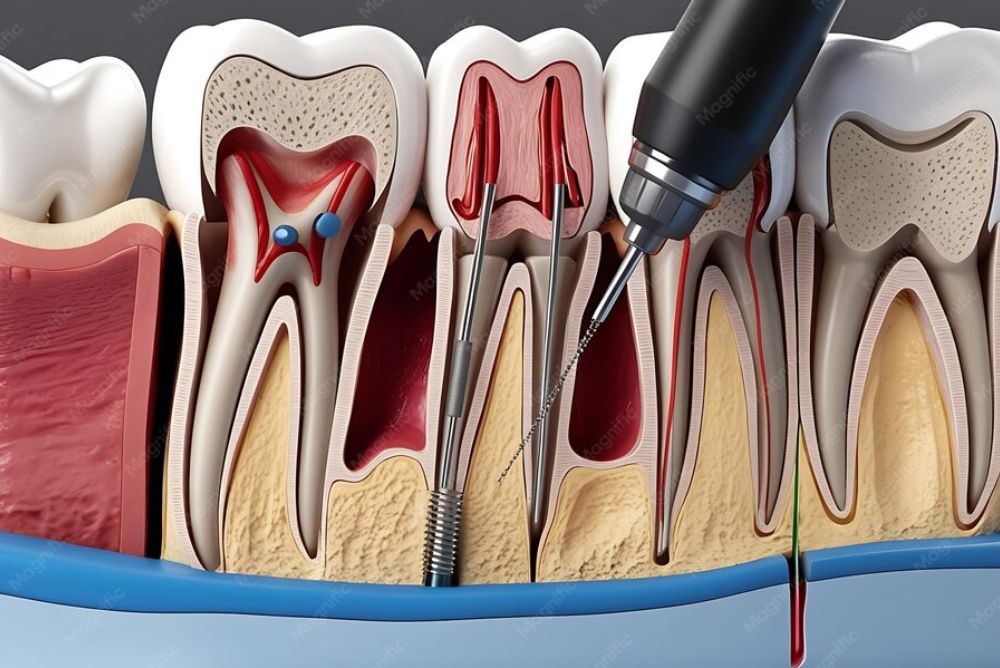
If you’ve recently had a root canal, you might be wondering whether the discomfort you’re feeling is cause for concern. This is a very common concern. Pain after root canal treatment is common, and in most cases, it’s completely normal. Understanding what to expect can help ease your mind and help you recover comfortably.
What Happens During a Root Canal?
A root canal is a dental procedure that removes infected or damaged tissue from inside a tooth. The dentist cleans and disinfects the inner canals, then seals the tooth to prevent further infection. Even though the procedure itself is done under local anesthesia and you won’t feel pain during treatment, some soreness afterward is expected. Your body is healing from the procedure, and that takes a little time.
Is Root Canal Pain Normal After Treatment?
Yes — is root canal pain normal? Absolutely, for the first few days. The tissues around the treated tooth can become irritated and inflamed during the natural healing process. Most patients describe it as a dull ache, mild sensitivity when biting, or tenderness around the area. This type of discomfort usually fades on its own within a week.
That said, some signs suggest the pain may not be part of normal healing. Watch out for:
- Severe, throbbing pain that gets worse after the first few days
- Swelling in your jaw, gums, or face that does not go down
- A bad taste or smell coming from the treated tooth
- Pain that spreads to your ear, neck, or other teeth
- Fever or general feeling of illness
If you notice any of these signs, it’s important to reach out to a dentist near you as soon as possible. These may be signs of a reinfection or complication that needs attention.
Root Canal Recovery Timeline
| Time After Treatment | What You May Feel | Is It Normal? |
| Day 1 – 2 | Soreness, pressure, mild throbbing | Yes – very common |
| Day 3 – 5 | Sensitivity when biting, mild ache | Yes – improving |
| Day 6 – 7 | Noticeable reduction in discomfort | Yes – nearly healed |
| After 1 week | Minimal to no pain | Yes – expected |
| Beyond 2 weeks | Persistent or worsening pain | No – see your dentist |
How to Manage Discomfort at Home
Managing mild discomfort after a root canal is usually straightforward. Here are a few tips that can help:
- Take over-the-counter pain relievers like ibuprofen or acetaminophen as directed
- Avoid chewing on the treated side until the permanent crown is placed
- Stick to soft foods for the first couple of days
- Rinse gently with warm salt water to reduce inflammation
- Avoid very hot or cold foods and drinks that may trigger sensitivity
Most patients feel significantly better within three to five days. If you’re still uncomfortable after a full week, it’s a good idea to check in with your dental provider.
Why Some Patients Feel More Pain Than Others
Everyone’s healing experience is different. The level of discomfort after root canal therapy near you can depend on several factors, including:
- The severity of the original infection before treatment
- Whether the tooth had a single canal or multiple canals (back teeth are more complex)
- Your overall health and immune response
- Whether you had a temporary or permanent restoration placed after the procedure
Patients who had a significant infection before the procedure may notice that healing takes a bit longer. This is normal. The body needs extra time to clear inflammation from the surrounding tissue.
When to Call Your Dentist
Mild soreness is expected, but certain symptoms need prompt dental attention. If you experience any of the following after root canal therapy near you, don’t wait:
- Pain that returns or suddenly worsens after initially getting better
- The temporary filling or crown feels loose, cracked, or has fallen out
- You notice a visible pimple or bump on the gum near the treated tooth
- Your bite feels significantly off or uneven
Catching complications early leads to faster and less costly resolution. Never hesitate to contact a dentist in Yellowknife if something doesn’t feel right — your comfort and dental health always come first.
Conclusion
Some soreness after a root canal is a natural part of healing. For most patients, discomfort fades within a few days and is easily managed at home. But if pain lingers, worsens, or comes with other symptoms, it’s time to get checked.
At Somba Ke Family Dental, our caring team is here to support you through every step of your dental care journey. Whether you need a follow-up after treatment or are looking for a trusted dentist in Yellowknife, we’re ready to help. Don’t let dental discomfort go unaddressed — book an appointment with us today, and let’s make sure your smile heals the way it should.
Frequently Asked Questions
How long does pain after a root canal last?
Most patients experience mild soreness for two to five days. A dentist near you should evaluate pain lasting beyond one week.
Is throbbing pain after a root canal normal?
Mild throbbing in the first day or two is common. Severe or worsening throbbing after three days may signal a complication requiring attention.
Can I take painkillers after root canal therapy?
Sure! Drugs such as ibuprofen or acetaminophen are generally safe and effective over-the-counter options for post-treatment discomfort after root canal therapy.
Why is my tooth still sensitive after a root canal?
Sensitivity can occur because the surrounding gum and bone tissue are still healing. This typically fades on its own within a week.
When should I see a dentist in Yellowknife after my root canal?
Seek a Yellowknife dentist if your discomfort escalates after three days, you develop swelling, or your restoration feels loose.